
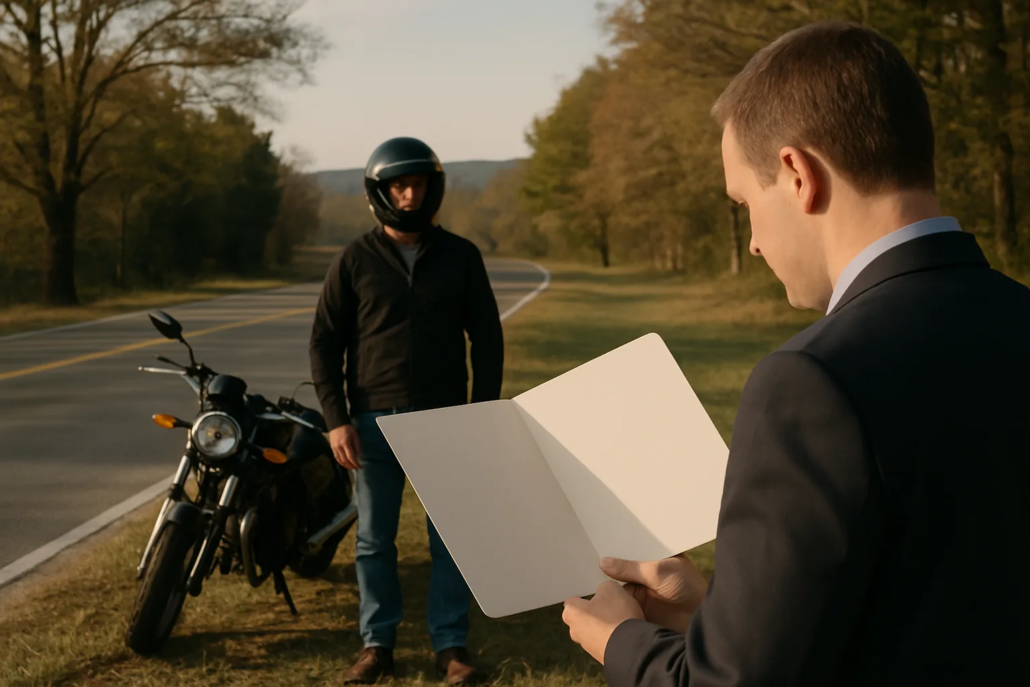
Which Policy Covers a Borrowed Motorcycle in Fayetteville?
A borrowed motorcycle can create insurance questions that are easy to overlook after a crash. If you were injured while riding a friend’s, relative’s, or coworker’s motorcycle, you may wonder whether the owner’s policy, your own policy, or another source of coverage applies. A Fayetteville borrowed motorcycle accident insurance claim often depends on details that are not obvious at the scene.
Elliot & Smith Law Firm provides Fayetteville motorcycle accident legal help for people evaluating these issues. This article explains how permission, vehicle ownership, household policies, exclusions, prompt notice, insurer interviews, and competing coverage positions may affect a claim in Fayetteville, Arkansas. It is also important not to assume that any policy will automatically pay simply because the motorcycle was insured.
Which Insurance Policy May Cover a Fayetteville Borrowed Motorcycle Accident Claim?
The starting point is usually the motorcycle’s insurance policy. In many situations, a policy issued to the owner may provide liability coverage when another person operates the motorcycle with the owner’s permission. However, permissive-use coverage is controlled by the policy’s language, its exclusions, and the specific facts surrounding the crash.
Why permission matters
Permission does not always have to be documented in a formal agreement. It may be shown through texts, messages, prior arrangements, or the owner’s conduct. Questions can arise if the rider exceeded the permission given, used the motorcycle for an excluded purpose, or did not have a valid license or required endorsement. These issues are fact-specific and should not be assumed one way or the other.
The rider’s own policy may also matter
A rider’s household auto or motorcycle policy may contain coverage that applies in limited circumstances, but many policies exclude vehicles owned by someone else or motorcycles that are not listed on the policy. The rider’s policy may also address uninsured or underinsured motorist benefits differently from liability coverage. In Fayetteville, Arkansas, reviewing the actual declarations page, endorsements, definitions, and exclusions is often more useful than relying on a general description of the policy.
What Should You Check When Insurers Investigate the Claim?
Coverage investigations often involve several documents and multiple insurance companies. The owner’s insurer may ask about permission and the motorcycle’s use. The rider’s insurer may ask whether the motorcycle was regularly available to the rider or whether another policy should respond. The other driver’s insurer may investigate fault and damages separately.
Useful information may include:
- The motorcycle’s registration, title, and identifying information;
- The owner’s declarations page and policy correspondence;
- The rider’s applicable household or motorcycle policy;
- Text messages or other records showing permission;
- The crash report, photographs, witness information, and vehicle damage records; and
- Medical records, bills, wage information, and other proof of losses.
The best evidence after an injury accident may help establish who owned the motorcycle, whether the rider had permission, what happened, and what losses followed. Prompt notice to potentially relevant insurers can be important, but notice is not the same as admitting fault or agreeing that a particular policy applies.
Should the rider give a recorded statement?
An insurer may request a recorded interview, ask for documents, or seek a detailed account of the crash. Basic factual information may be appropriate, but speculation about fault, permission, policy coverage, or future medical needs can create confusion. Readers can review how to handle insurance adjusters after a crash before responding and may wish to obtain legal guidance when the coverage position is disputed.
What Happens When Coverage Is Denied or Limited?
An insurer may contend that the rider lacked permission, that an exclusion applies, that another policy is primary, or that the motorcycle was being used in a way the policy does not cover. A denial may also involve questions about household membership, regular access to the motorcycle, policy cancellation, late notice, or the difference between liability and first-party benefits.
A careful review should generally compare the insurer’s position with the complete policy, including endorsements and definitions. A reservation-of-rights letter is not necessarily a final resolution of every issue, and a verbal statement from an adjuster may not explain the insurer’s complete position. Written communications should be saved, including claim numbers, coverage letters, requests for information, and explanations for any delay.
If medical bills are arriving while liability or policy priority remains unsettled, review information about who may pay medical bills after an Arkansas accident. Depending on the circumstances, health insurance, medical-payment benefits if available, and eventual liability coverage may each play different roles. Reimbursement claims or liens may also need attention, so financial arrangements should be evaluated carefully rather than treated as interchangeable sources of payment.
Available coverage can affect how an injury claim is evaluated, but policy limits do not determine the full value of an injury by themselves. Medical expenses, lost income, pain, impairment, liability evidence, and other losses may matter. A resource on how to value an Arkansas injury claim provides broader context, while a disputed denial may require guidance on handling an Arkansas insurance dispute after an injury.
Frequently Asked Questions
Does the motorcycle owner’s insurance always cover a friend who borrows the bike?
No. The owner’s policy may provide coverage for a permitted driver, but the result depends on the policy language and facts. Questions may include whether permission existed, whether the rider had the required license or endorsement, whether the motorcycle was used for an excluded purpose, and whether another exclusion applies. Arkansas insurance rules and policy terms can change, so the complete policy should be reviewed for the specific claim.
Can my own insurance cover injuries from a borrowed motorcycle?
Possibly, but not automatically. A rider’s household policy may contain relevant benefits, while other provisions may exclude a motorcycle owned by someone else or a vehicle not listed on the policy. Uninsured or underinsured motorist coverage, medical-payment benefits, and liability coverage are separate concepts. The declarations page, endorsements, definitions, and exclusions should be examined together rather than relying on a general assumption about personal insurance.
What if the owner never reported the borrowed motorcycle crash?
The rider may still need to notify potentially relevant insurers promptly, even if the owner has not made a report. Notice requirements and cooperation provisions can affect an insurer’s investigation, but late notice does not automatically answer every coverage question. Keep copies of communications and provide accurate facts without guessing about fault or policy interpretation. Legal guidance may be useful if an insurer cites late notice as a reason to limit coverage.
Can a Fayetteville attorney review more than one insurance policy?
Yes. When a borrowed motorcycle is involved, reviewing the owner’s policy, the rider’s potentially applicable policies, and any at-fault driver’s coverage may help identify competing coverage positions. An attorney can also examine permission evidence, exclusions, damages, and written insurer communications. The review does not guarantee that coverage will be available, but it may clarify the issues that need to be addressed in a Fayetteville claim.
How Elliot & Smith Law Firm Can Help
Elliot & Smith Law Firm is dedicated to helping Fayetteville, Arkansas, motorcycle accident victims understand the insurance issues surrounding an injury claim. The firm can evaluate questions involving permission, policy documents, exclusions, insurer interviews, medical expenses, and competing coverage positions. Its team is committed to fighting for clients’ rights while recognizing that every policy and crash presents different facts.
If you were injured while riding a borrowed motorcycle, contact Elliot & Smith Law Firm for a free consultation or case evaluation. The firm is ready to evaluate your situation and discuss potential next steps without promising a particular outcome.
The information in this article is for educational purposes only and does not constitute legal advice. Contact a qualified attorney licensed in Fayetteville, Arkansas for advice specific to your situation.


