
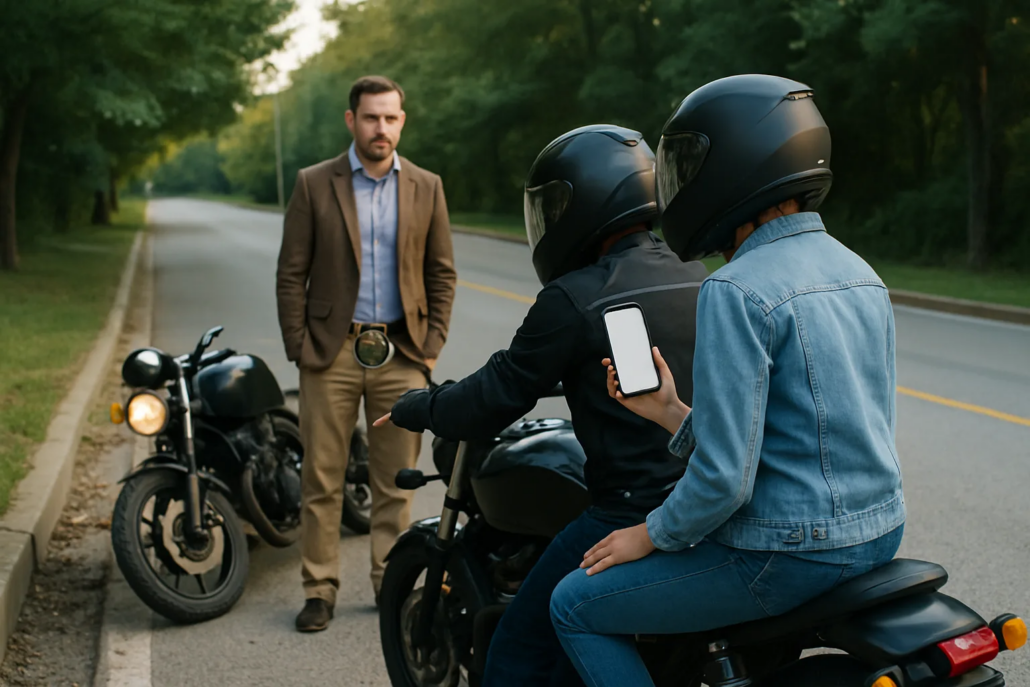
After a Crash, Who Pays a Fayetteville Motorcycle Passenger?
A motorcycle passenger may be focused on pain, transportation, and medical bills after a crash—not on identifying every potentially responsible party. Yet the answer to “Can a Fayetteville motorcycle passenger pursue a claim after a crash?” often depends on who caused the collision, whose insurance may apply, and what evidence remains available. In some cases, the motorcycle operator, another driver, or both may be involved.
Generally speaking, a passenger’s claim is separate from the operator’s claim, although Arkansas rules about fault, permission, insurance, and passenger conduct can affect the analysis. Fayetteville motorcycle accident legal help may help an injured passenger understand the available options. Elliot & Smith Law Firm provides guidance on the issues that can shape a Fayetteville motorcycle passenger accident claim, including responsible parties, coverage, records, and common mistakes.
Can a Fayetteville Motorcycle Passenger File an Accident Claim?
A passenger may be able to pursue compensation when another person’s negligence contributed to the crash or injuries. Possible sources include the motorcycle operator’s liability coverage, another driver’s insurance, and potentially applicable uninsured- or underinsured-motorist coverage. The specific policies and facts matter, and more than one claim may be possible.
The operator’s responsibility
A motorcycle operator may have responsibilities involving speed, attention, safe lane movement, following distance, and control of the motorcycle. If the operator’s conduct contributed to the crash, the passenger’s relationship with that person does not automatically resolve the claim. However, Arkansas law may consider fault allocation, permission to ride, and other circumstances. A passenger who was a friend, family member, or dating partner may still need an objective review of the facts.
Permission and passenger conduct
Permission to ride can matter when an insurer evaluates coverage. Passenger conduct may also become relevant if an insurer argues that the passenger contributed to the injuries—for example, by interfering with operation or failing to follow reasonable safety directions. These issues are fact-specific and should not be assumed to defeat a claim. Review Arkansas motorcycle passenger injury rights for more discussion of independent passenger claims and potentially responsible insurers. For additional context on this issue, see Motorcycle Injury Claim Guide for Arkansas Riders.
Which Insurance and Other Parties May Be Involved?
A passenger hurt on a motorcycle may need to investigate several possible sources of payment. The operator’s policy is not necessarily the only coverage to examine. In Fayetteville, Arkansas, the available claims may depend on the collision circumstances, policy language, limits, exclusions, and whether the other driver can be identified.
Potential sources may include:
- The motorcycle operator’s liability insurance, if the operator’s actions contributed to the crash.
- The other driver’s liability coverage, when another motorist caused or contributed to the collision.
- Uninsured- or underinsured-motorist coverage, if applicable and if the responsible driver lacks sufficient insurance.
- Health insurance or other available coverage that may help address bills while liability is investigated.
A no-contact crash does not necessarily end the inquiry. For example, a car may force a motorcycle to swerve or fall without physically striking it. Statements from witnesses, nearby video, vehicle positions, roadway evidence, and damage patterns may help evaluate an Arkansas no-contact motorcycle crash claim.
If the other driver leaves, preserving information becomes especially important. Calling law enforcement, recording a vehicle description or partial plate when safely possible, identifying witnesses, and checking for nearby cameras may help. A passenger can also review steps after a Fayetteville motorcycle hit-and-run while being careful about recorded statements or settlement discussions before the coverage picture is understood.
Insurance adjusters may ask for a recorded interview, medical authorization, or release. Those requests can have legal significance. Depending on the circumstances, an attorney may help the passenger understand what information is appropriate to provide and which policies should be notified.
What Should a Passenger Preserve After a Fayetteville Crash?
Evidence can become harder to locate as vehicles are repaired, surveillance footage is overwritten, memories change, and medical records accumulate across different providers. A passenger should generally preserve information rather than attempt to determine fault alone. The best evidence after a motorcycle passenger injury may include:
- Photographs of the roadway, motorcycle, other vehicles, visible injuries, clothing, helmet, and relevant equipment, when safely available.
- The incident report or responding-agency information, along with the names and contact details of witnesses.
- Insurance cards, policy correspondence, claim numbers, and messages exchanged with the operator or insurers.
- Medical records, bills, prescriptions, appointment information, and explanations of benefits. The resource on who may pay the passenger’s medical bills explains why these records can matter while a claim is pending.
- Employment records showing missed work or reduced ability to perform job duties, if income loss is part of the claim.
- A personal record of symptoms, limitations, travel to appointments, and how the injury affects ordinary activities.
A passenger should avoid deleting relevant texts, posting detailed crash commentary online, or giving inconsistent accounts. The goal is not to create a perfect narrative; it is to preserve accurate information. Seeking medical attention may also create records of the passenger’s complaints and limitations, but treatment decisions belong to the passenger and healthcare professionals.
Potential damages may include qualifying medical expenses, lost income, and non-economic losses such as pain or reduced enjoyment of life. The value of an injury claim depends on evidence, fault, insurance limits, future effects, and other facts. An early offer may not reflect later-discovered losses, so understanding how Arkansas injury claims are valued can provide useful background.
Frequently Asked Questions
Can I bring a claim if I was riding with a friend or family member?
Possibly. A passenger’s relationship with the motorcycle operator does not automatically eliminate a claim. The analysis may involve the operator’s conduct, permission to ride, applicable insurance, Arkansas fault rules, and the passenger’s own conduct. Because claims involving someone close to the passenger can create practical and emotional concerns, an attorney may review the facts and available coverage confidentially before the passenger decides how to proceed.
What if the motorcycle operator did not have insurance?
Other coverage may still need to be investigated. Depending on the policies and collision facts, uninsured- or underinsured-motorist coverage, another driver’s liability insurance, or health coverage may be relevant. Coverage is controlled by policy language and specific Arkansas circumstances, so the absence of insurance on the motorcycle does not by itself answer every question. A passenger should preserve all insurance information that becomes available.
Can a passenger claim compensation after a motorcycle hit-and-run?
A claim may remain possible, but identifying the driver and available coverage can be difficult. A passenger may need information from law enforcement, witnesses, traffic or business video, and insurance policies. Uninsured-motorist provisions may be relevant in some situations, subject to policy terms and Arkansas requirements. Prompt evidence preservation can be important because video and witness recollections may not remain available indefinitely.
How long does a Fayetteville passenger have to pursue a claim?
Deadlines depend on the parties, the type of claim, the insurance policy, and other circumstances. Arkansas time limits and notice requirements can vary, and exceptions may apply. Waiting can also make evidence harder to preserve. Because a missed deadline may affect legal rights, a passenger should discuss the crash with a licensed Arkansas attorney promptly rather than rely on a general online timeline.
How Elliot & Smith Law Firm Can Help
Elliot & Smith Law Firm is dedicated to helping injured people understand the insurance and liability questions that may follow a motorcycle crash. The firm can review how the collision occurred, whether the operator or another driver may be involved, what policies might apply, and whether photographs, witness accounts, medical records, and employment documents support the claim. The team is committed to fighting for a passenger’s rights while explaining the process in clear terms and avoiding promises about a particular outcome.
Contact Elliot & Smith Law Firm for a free consultation or case evaluation regarding your Fayetteville motorcycle passenger accident claim.
The information in this article is for educational purposes only and does not constitute legal advice. Contact a qualified attorney licensed in Fayetteville, Arkansas for advice specific to your situation.


