
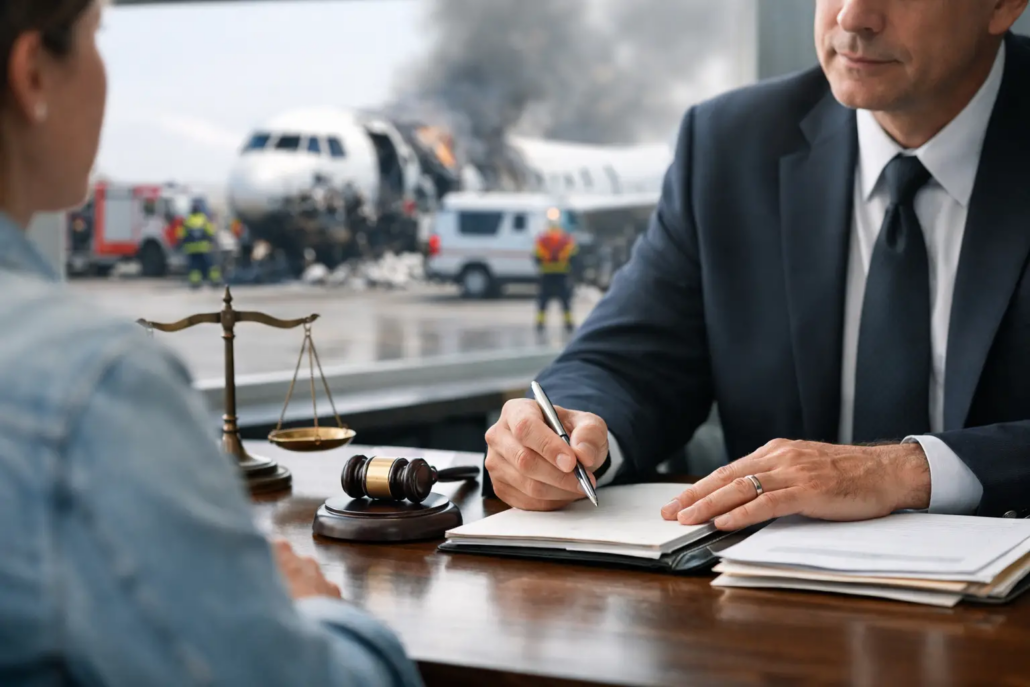
When to Call an Aviation Accident Attorney
Aviation crashes leave families with more than shock and grief. They can leave devastating injuries, unanswered questions, mounting bills, and an insurance company already working to limit what it pays. An aviation accident attorney can step in early to protect your rights, preserve critical evidence, and fight for the compensation your family needs to move forward.
A crash involving a private plane, charter flight, helicopter, crop duster, or other aircraft is not handled like an ordinary vehicle accident. The facts may involve federal safety rules, complex maintenance records, weather data, pilot qualifications, air traffic communications, and multiple companies that may deny responsibility. The sooner an experienced legal team begins investigating, the better chance there is to secure the evidence that tells the real story.
Why Aviation Accident Cases Are Different
Aircraft accidents are often catastrophic. Survivors may face traumatic brain injuries, spinal damage, severe burns, fractures, permanent disability, and months or years of treatment. Families who lose someone in a crash can face sudden financial instability alongside an unimaginable personal loss.
At the same time, liability is rarely simple. A pilot may have made an error, but that does not automatically mean the pilot is the only responsible party. A dangerous mechanical defect, skipped maintenance, poor fuel handling, unsafe flight planning, negligent instruction, or pressure from an operator to fly in bad conditions may have contributed to the crash.
The National Transportation Safety Board and Federal Aviation Administration may investigate, but those agencies do not pursue compensation for injured people. Their focus is safety and fact-finding. Your lawyer’s job is different: build a strong civil claim, identify every accountable party, and seek damages that reflect the full harm done.
When to Contact an Aviation Accident Attorney
You do not need to wait until every answer is available. In fact, waiting can put a claim at a disadvantage. Aircraft wreckage may be moved, parts may be inspected or replaced, records can disappear, and witnesses’ memories can fade.
Contact a lawyer as soon as possible after a crash if you or a loved one suffered serious injuries, if a family member was killed, or if an insurer asks for a recorded statement, release, or quick settlement. Early settlements can be especially dangerous when the full medical consequences are still unknown.
A prompt legal review is also wise when the accident involved a charter company, flight school, business aircraft, sightseeing operation, helicopter service, or agricultural aircraft. These cases can involve commercial policies and corporate defendants with lawyers and insurance adjusters working immediately to control the narrative.
What Caused the Crash Matters
A serious aviation case starts with a disciplined investigation. The goal is not to guess what happened. It is to gather the evidence needed to prove it.
Depending on the circumstances, that evidence may include cockpit voice or flight data information, air traffic control recordings, pilot logbooks, maintenance and inspection records, weather reports, dispatch documents, fuel records, photographs, witness accounts, and the aircraft’s ownership history. Expert analysis may be necessary to evaluate aircraft systems, human factors, flight operations, and whether required safety procedures were followed.
Common causes of aviation accidents include pilot error, inadequate training, fatigue, impaired operation, improper loading, weather-related decision-making, mechanical failure, defective components, negligent maintenance, fuel contamination, runway hazards, and air traffic control mistakes. More than one factor may be involved. A careful case does not stop at the most obvious explanation.
The Responsible Party May Not Be Obvious
The person flying the aircraft may be liable, but other parties can share responsibility. An owner who allowed an unsafe aircraft to be operated, a maintenance provider that failed to identify a dangerous condition, an operator that cut corners, or a manufacturer connected to a defective part may all be part of the case.
This matters because a complete claim must look beyond the individual pilot. Catastrophic losses require a serious evaluation of every available source of compensation. Leaving a responsible party out can leave an injured person or grieving family without the resources they need.
Compensation Should Reflect the Full Loss
Insurance companies may sound concerned at first, but their financial interest is clear: resolve the claim for as little as possible. They may question the severity of injuries, argue that a preexisting condition is to blame, or pressure a family to accept money before the long-term impact is understood.
A strong aviation accident claim can seek compensation for medical expenses, future treatment, rehabilitation, lost income, reduced earning ability, pain and suffering, emotional distress, disfigurement, disability, and property losses. When a crash causes a death, surviving family members may have a wrongful death claim for the losses created by that death.
The value of a case depends on the evidence, the injuries, available insurance coverage, the responsible parties, and the specific damages suffered. No honest lawyer should promise a result before investigating the facts. But you should expect your attorney to take the loss seriously and prepare the case as if it may need to be fought in court.
Protect Your Family After an Aircraft Crash
The days after a crash can feel chaotic. You may be dealing with hospitalization, funeral arrangements, calls from insurers, and pressure to make decisions before you have had time to process what happened. You do not have to manage legal issues alone.
Preserve anything connected to the trip or flight, including tickets, texts, emails, photographs, video, receipts, and contact information for witnesses. Keep copies of medical records and bills as they become available. Avoid posting details of the crash or your injuries on social media, and do not sign an insurance release or provide a recorded statement without legal advice.
Most importantly, prioritize medical care and give your family room to recover. A legal team can handle communication with insurers, request and preserve evidence, coordinate with qualified experts, and keep you informed without adding to your burden.
Arkansas Families Deserve a Team Ready to Fight
Aviation claims can involve state law, federal regulations, out-of-state companies, and insurance policies with complicated terms. That complexity is not a reason to settle for less. It is a reason to put experienced advocates in your corner.
At Elliott & Smith Law Firm, we represent injured people and families facing serious losses caused by negligence. We know that compensation is not just a legal number. It can pay for treatment, replace lost income, provide stability for a family, and hold careless people and companies accountable. Consultations are free, and there is no attorney fee unless we recover compensation for you.
If an aircraft crash has turned your life upside down, getting answers is a reasonable first step. The right legal help can take the pressure off your shoulders while you focus on the people who need you most.


