
What Evidence Matters in a Fayetteville Road Hazard Claim?
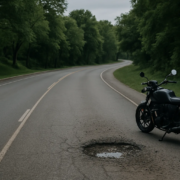
A rider rounds a familiar Fayetteville street and suddenly encounters loose gravel, a deep pothole, standing water, or an uneven lane edge. A quick maneuver may not be enough to keep a motorcycle upright. When that happens, people often ask: when can an Arkansas road hazard contribute to a Fayetteville motorcycle accident, and what information could connect the roadway condition to the crash?
A Fayetteville motorcycle accident road hazard claim can involve more than showing that a dangerous condition existed. Generally speaking, the evidence must help explain what happened, where it happened, who controlled or maintained the location, and whether the condition may have been known or reasonably discoverable. Public-road claims can also involve special Arkansas rules and defenses, while private construction sites or parking areas may raise different questions.
Elliot & Smith Law Firm helps injured people evaluate these issues in an organized way. This article discusses common roadway hazards, evidence that may matter, possible responsible entities, and why prompt investigation can be important. It is general information, not a prediction about any particular claim.
When Can an Arkansas Road Hazard Contribute to a Fayetteville Motorcycle Accident?
A roadway condition may be relevant when it played a meaningful role in the loss of control or collision. The condition does not necessarily have to be the only cause. For example, a motorcycle could encounter a pothole, swerve around it, and collide with another vehicle or roadside object. The legal analysis may examine the full sequence rather than only the point of impact.
Road conditions that may matter
Potential hazards include:
- Potholes, broken pavement, or abrupt pavement edges
- Gravel, mud, construction materials, or other roadway debris
- Uneven surfaces between lanes or recently repaired sections
- Standing water caused by drainage problems
- Missing, inadequate, or obscured warnings near construction or roadway changes
- Objects or conditions that make a lane unexpectedly difficult to navigate
The physical appearance of a hazard is only one part of the inquiry. Its size, depth, visibility, location, duration, lighting, traffic pattern, and relationship to the motorcycle’s path may also matter. Weather and roadway maintenance records can provide additional context.
In Fayetteville, Arkansas, responsibility may depend on who owned, controlled, maintained, or performed work at the location. That could involve the City of Fayetteville, Washington County, the Arkansas Department of Transportation, a private contractor, a property owner, or another entity. Road ownership and maintenance responsibilities are not always obvious from a crash scene.
What Evidence Supports a Fayetteville Motorcycle Accident Road Hazard Claim?
Prompt evidence collection can help preserve details that may change quickly. A hazard could be repaired, covered, moved, or altered by traffic and weather. Photos taken from safe locations may show the condition, lane position, sight distance, surrounding signs, lighting, and nearby landmarks. Images should not require anyone to stand in traffic or return to an unsafe area.
Information that may help establish notice
A claim involving a public or private roadway may require investigation into whether the responsible entity knew, or should reasonably have known, about the condition. Depending on the circumstances, potentially relevant information can include:
- The exact location, direction of travel, lane, and approximate path of the motorcycle.
- Photographs or video of the hazard and the surrounding roadway.
- Names and contact information for witnesses who saw the condition or the crash.
- Police, fire, towing, or emergency-response records, when available.
- Prior complaints, work orders, inspection records, repair logs, or maintenance schedules.
- Construction plans, contractor records, traffic-control materials, and warning placement.
- Nearby surveillance or vehicle-camera footage that may be preserved before it is overwritten.
A report that merely says a motorcycle “lost control” may not capture the roadway condition. Riders and witnesses can provide information to investigators, but they should avoid guessing about facts they did not observe. A prompt attorney review may help identify preservation requests and the appropriate record sources.
For claims arising in Fayetteville, Arkansas, the proper agency or entity may depend on the road segment and the nature of the hazard. Arkansas rules affecting claims against governmental entities can differ from rules involving private parties. Deadlines, notice requirements, immunity issues, and procedural steps may also vary by jurisdiction and should be evaluated using current law.
Who May Be Responsible for a Dangerous Roadway in Arkansas?
Identifying a potential defendant is a fact-specific process. The entity that owns a road may not be the same entity that performs repairs, manages a construction zone, controls drainage, or places warning devices. A commercial parking lot, apartment entrance, private access road, or construction site may involve different ownership and maintenance arrangements.
Possible categories of responsible parties may include:
- A public agency with a maintenance or traffic-control role
- A contractor or subcontractor performing roadway or utility work
- A commercial property owner or premises manager
- A party responsible for transporting or securing materials that reached the roadway
- Another road user whose conduct created or worsened the hazard
A rider’s own actions may also become part of the analysis. Speed, visibility, weather, traffic, avoidance options, and compliance with roadway rules can be examined. Arkansas follows comparative-fault principles, but the effect of any assigned fault depends on the facts and current Arkansas law. This is one reason a roadway condition should be documented without assuming that either the rider or a public agency is automatically responsible.
Common mistakes include waiting too long to identify the exact location, relying only on a general crash report, discarding damaged riding equipment, or posting speculative statements online. A person may also contact an agency or insurer without understanding what information should be preserved. Depending on the circumstances, an attorney may help organize evidence, investigate ownership and notice, and communicate with involved parties while protecting the client’s legal interests.
Frequently Asked Questions
Can a pothole cause a motorcycle accident claim in Arkansas?
A pothole may support a claim when evidence connects the condition to the crash and supports a legally responsible party’s duty or liability. Important facts can include the pothole’s location, size, visibility, duration, prior reports, and who controlled the roadway. Claims involving Arkansas public entities may involve special rules and defenses. A lawyer can evaluate the available evidence and identify issues that may affect the claim.
What should I record after a road debris motorcycle accident in Fayetteville?
If it is safe, record the exact roadway, travel direction, lane, nearby landmarks, weather, lighting, traffic conditions, and the hazard’s appearance. Photograph the motorcycle and roadway from safe positions, and obtain witness contact information. Do not interfere with traffic or put yourself at risk. Preserve relevant clothing, helmet, motorcycle parts, and digital footage, and avoid making unsupported conclusions about fault.
How can I find out who maintains a Fayetteville roadway?
Road ownership and maintenance responsibility may involve the City of Fayetteville, Washington County, the Arkansas Department of Transportation, a contractor, or a private owner. The road’s location, classification, and nearby construction can matter. Public records, work orders, permits, contracts, and agency responses may help clarify responsibility. Because the correct entity is not always apparent at the scene, an investigation may be useful.
Does a warning sign eliminate responsibility for a dangerous roadway?
Not necessarily. The adequacy, visibility, placement, timing, and relevance of a warning may be disputed, and a sign may not address every condition. Other facts can include whether the hazard changed, whether the warning was obscured, and whether traffic was directed safely. The effect of a warning depends on the circumstances and applicable Arkansas law, so it should not be treated as conclusive by itself.
How Elliot & Smith Law Firm Can Help
Elliot & Smith Law Firm is dedicated to helping Fayetteville motorcycle riders understand the evidence and legal issues that may arise after a roadway-related crash. The firm can review photographs, witness information, crash materials, roadway conditions, and available records while considering whether a public agency, contractor, property owner, or another party may be involved.
The team is committed to fighting for clients’ rights and is ready to evaluate your situation in light of the facts and applicable Arkansas law. If you or a family member is dealing with a possible motorcycle accident road hazard claim, contact Elliot & Smith Law Firm for a free consultation or case evaluation.
The information in this article is for educational purposes only and does not constitute legal advice. Contact a qualified attorney licensed in Fayetteville, Arkansas for advice specific to your situation.


