
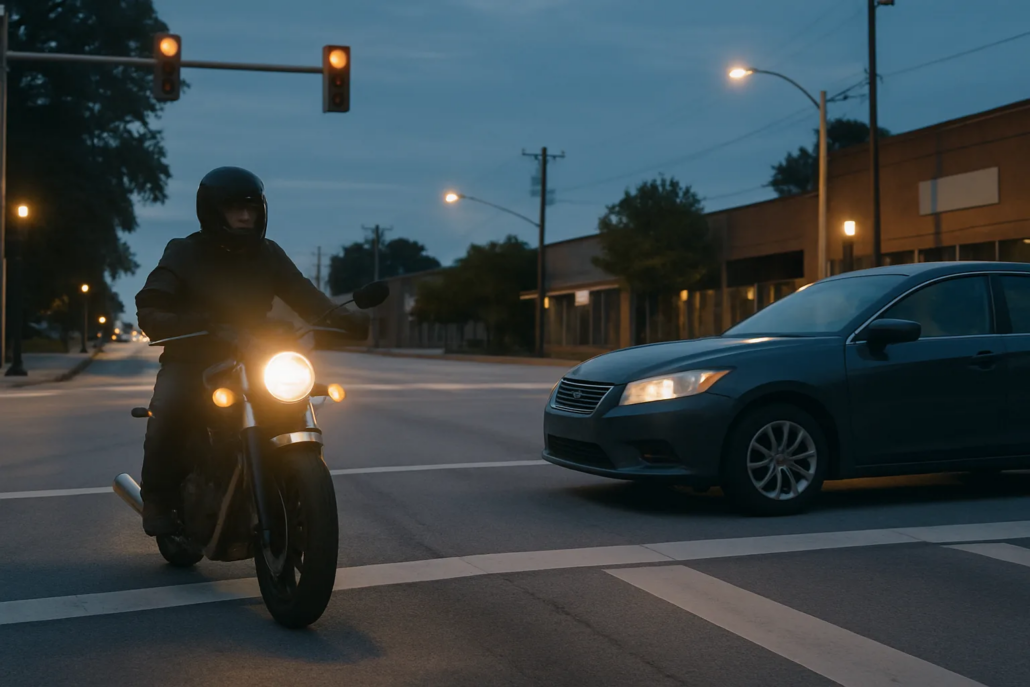
How Can Fayetteville Riders Prove Motorcycle Visibility?
A driver’s statement that they did not see a motorcycle can quickly become an insurer’s explanation for a collision. In a Fayetteville motorcycle accident visibility claim, that explanation may affect how the carrier investigates fault, evaluates injuries, and approaches settlement. But saying a motorcycle was difficult to see is not the same as proving that the rider caused the crash.
For Fayetteville motorcycle accident legal guidance, riders may benefit from preserving evidence before lighting, traffic positions, and witness memories change. Elliot & Smith Law Firm helps readers understand the issues that may matter without assuming that an insurer’s first version is complete. This article covers immediate steps, conspicuity evidence, driver conduct, no-contact crashes, and ways to evaluate an insurer’s position. For additional context on this issue, see The Best Evidence After an Injury Accident.
What Does a Fayetteville Motorcycle Accident Visibility Claim Need to Show?
A visibility allegation usually focuses on whether the driver had a reasonable opportunity to notice the motorcycle. That inquiry can involve more than the motorcycle’s color or the rider’s clothing. It may require examining the intersection, lane positions, weather, illumination, traffic flow, timing, and the driver’s actions immediately before impact.
Harder to see does not automatically mean legally responsible
Motorcycles are smaller than passenger vehicles, and their size can affect how quickly another driver notices them. Still, a motorcycle being less conspicuous than a car does not by itself establish negligence or eliminate another driver’s duties. Depending on the circumstances, the key issue may be whether the driver looked carefully, maintained an appropriate lookout, yielded when required, or moved into a path that was already occupied.
Arkansas fault rules can affect how responsibility and damages are assessed, but the result depends on the evidence and the facts of the collision. Laws and procedures may change, and rules applied in Fayetteville, Washington County, or elsewhere in Arkansas may differ from those in another jurisdiction.
Evidence that can test the visibility allegation
Useful evidence may include:
- Headlight and taillight condition, switch settings, and available photographs
- Reflective material, clothing, helmet, and motorcycle accessories
- Street lighting, shadows, weather, sun position, and roadway visibility
- The vehicles’ lanes, directions, distances, and positions before impact
- Damage locations, debris, skid marks, and the final resting positions
- Statements from witnesses who saw the motorcycle, driver, or traffic pattern
The goal is not to assume that any single fact proves fault. It is to preserve enough information to compare the insurer’s theory with the physical scene and independent accounts.
How Should a Fayetteville Rider Preserve Conspicuity Evidence?
Conditions can change rapidly after a collision. A motorcycle may be repaired or moved, weather may alter the roadway, surveillance footage may be overwritten, and witnesses may remember events differently over time. Riders may wish to organize available evidence while avoiding guesses about speed, distance, or what another person could see.
The Arkansas motorcycle injury claim steps resource provides broader information about reporting a crash, communicating with insurers, and preserving an injury claim. In general, a rider may consider the following evidence-preservation measures, depending on their condition and circumstances:
- Photograph the motorcycle and equipment. Preserve images of the headlight, turn signals, brake light, reflectors, fairings, helmet, clothing, and other relevant equipment before repairs or disposal. Keep original files and avoid editing them.
- Document the roadway and lighting. Photographs or video may show lane markings, sight lines, traffic controls, nearby lighting, foliage, parked vehicles, and obstructions. If the light was changing, note the approximate conditions without overstating certainty.
- Identify witnesses. Save names and contact information for people who observed the crash, the traffic signal, vehicle movements, or lighting. A witness who only arrived afterward may still have useful information, but their limits should be clear.
- Preserve video promptly. Nearby businesses, residences, vehicles, and traffic systems may have relevant footage. A lawyer or investigator may be able to send a preservation request before recordings are routinely deleted.
- Keep physical items available. Damaged clothing, helmet components, motorcycle parts, and electronic devices may help document visibility or impact conditions. They should not be altered merely to fit an insurer’s theory.
These steps are educational rather than a checklist of required action. A rider’s health and safety come first, and an attorney can explain what evidence may matter in a particular Fayetteville, Arkansas, claim.
How Can Riders Challenge a Driver’s Failure to See the Motorcycle?
A driver’s statement that they did not see the motorcycle is evidence about perception, not necessarily a complete account of what happened. Investigators may examine whether the driver was turning, changing lanes, following another vehicle, entering an intersection, or looking elsewhere. They may also consider whether another vehicle blocked the sight line or whether several drivers contributed to the sequence.
Fayetteville distraction evidence from phones, video, and witnesses may help test whether the driver’s attention was directed away from traffic. Depending on availability and legal process, relevant proof can include witness accounts, dashcam footage, nearby surveillance, phone-use information, and vehicle data. These sources do not automatically establish distraction; they may help compare competing explanations.
Visibility arguments also sometimes overlap with speed allegations. Evidence that can challenge a Fayetteville motorcycle speeding claim may include roadway measurements, video, damage patterns, event data, and reliable witness descriptions. A driver’s inability to see a motorcycle does not itself prove that the motorcycle was speeding, just as a rider’s speed does not automatically establish that the driver acted reasonably.
A collision may occur without direct vehicle contact. In Arkansas claims after a no-contact motorcycle crash, roadway marks, final positions, witness testimony, surveillance, and the timing of a driver’s movement may help connect an evasive maneuver to the driver’s conduct. When more than one vehicle was involved, Fayetteville multi-driver fault analysis may be relevant to blocked sight lines, lane changes, following distances, and turning movements.
Before responding in detail to an insurer, riders may want to understand what evidence has been collected and how fault is being assigned. They may also wish to review how to evaluate a Fayetteville motorcycle accident settlement offer before accepting an early payment or giving a recorded statement. Depending on the circumstances, an attorney may help organize the evidence and communicate with the carrier.
Frequently Asked Questions
Does a motorcycle’s headlight prove that the driver was at fault?
Not by itself. A functioning headlight may be relevant to a visibility dispute, but fault can also depend on traffic position, road design, lighting, timing, speed, and the driver’s conduct. Photographs, inspection evidence, witness accounts, and video may help establish whether the light was operating and whether the driver had an opportunity to see the motorcycle. An attorney can evaluate how those facts fit Arkansas law.
What if the driver says the motorcycle appeared suddenly?
That statement may describe the driver’s perception, but it does not resolve why the motorcycle appeared suddenly or whether the driver was maintaining a proper lookout. Vehicle positions, lane changes, intersections, obstructions, video, and witness observations may help reconstruct the sequence. Because memories can differ after a crash, preserving original photographs and recordings may be important to a Fayetteville claim.
Can dark clothing automatically reduce a rider’s claim?
No single clothing choice automatically determines legal responsibility. Clothing may be one fact in a broader analysis that includes headlights, reflectors, lighting, weather, traffic conditions, and the driver’s actions. An insurer may emphasize clothing while overlooking other evidence. The effect of that fact depends on the full record and any applicable Arkansas comparative-fault principles.
What should a rider do if the insurer requests a recorded statement?
A rider may ask what topics the insurer wants to address and may wish to obtain legal guidance before providing a detailed statement. The rider should avoid guessing or agreeing with an inaccurate description of lighting, speed, or vehicle position. A consultation can help explain the potential significance of the request, the available evidence, and the rider’s communication options.
How Elliot & Smith Law Firm Can Help
Elliot & Smith Law Firm is dedicated to helping Fayetteville riders understand disputed motorcycle accident claims, including allegations that a motorcycle was difficult to see. The firm is committed to fighting for a careful review of lighting, roadway conditions, vehicle positions, witness accounts, video, motorcycle equipment, and competing fault theories.
Depending on the circumstances, the team may help preserve evidence, communicate with insurers, assess injury and property-loss issues, and explain potential next steps. If an insurer is blaming visibility, timing can matter because physical and digital evidence may not remain available indefinitely. Contact Elliot & Smith Law Firm for a free consultation or case evaluation to discuss your situation.
The information in this article is for educational purposes only and does not constitute legal advice. Contact a qualified attorney licensed in Fayetteville, Arkansas for advice specific to your situation.


