
Who May Own a Hazardous Road in a Lowell Motorcycle Claim?
A rider traveling through Lowell may encounter a pothole, loose gravel, standing water, or a sign that is difficult to see. If a roadway condition contributes to a crash, a Lowell motorcycle accident road hazard claim may involve more than explaining how the fall happened: it may also require identifying who controlled the road and what evidence can show the condition’s role. Elliot & Smith Law Firm helps readers understand the questions that can arise in a claim, without assuming that a public agency is responsible in any particular case. This guide covers documenting the hazard, investigating who maintained the road, and why claims involving a city, county, or state entity may raise additional procedural issues.
How a Lowell motorcycle road hazard claim takes shape
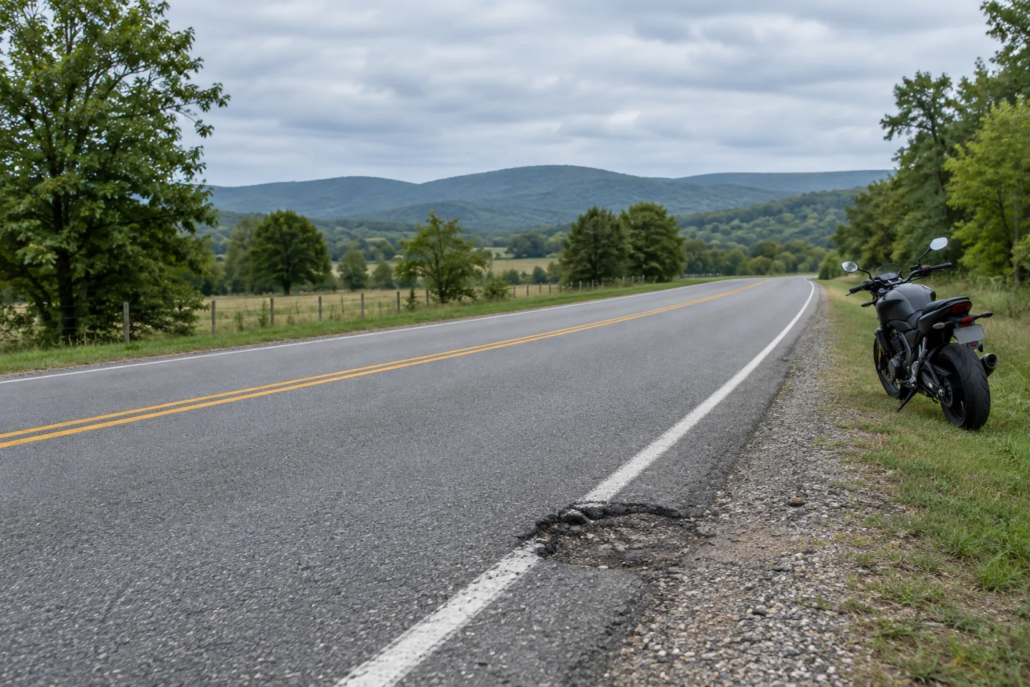
A road defect does not automatically establish legal responsibility. A claim generally depends on the available evidence, the condition of the roadway, who had responsibility for it, and whether the condition contributed to the crash and resulting harm. Relevant conditions can include a deep or poorly visible pothole, debris, uneven pavement, inadequate drainage, or vegetation that blocks a warning sign. The specific circumstances matter; a rider’s account is important, but it may not answer every question about cause or responsibility.
Document the scene and the condition
If it is safe and practical, photographs or video may help show the hazard, the surrounding roadway, lighting, weather, and the rider’s direction of travel. Images from more than one angle can show scale and visibility. A rider or witness may also record the location, approximate time, lane position, nearby intersections, and contact information for people who saw the event. Avoid entering traffic or taking risks to collect evidence.
Conditions can change quickly. A pothole may be repaired, debris cleared, or a temporary warning placed after a crash. Save original photos and videos, and keep copies of relevant communications and records. The Arkansas motorcycle injury claim guide offers broader context about preserving evidence in a motorcycle injury claim. Related practical guidance on Arkansas crash evidence that can protect an injury claim may also help readers think through what records could be relevant.
Preserve more than photographs
Depending on the circumstances, useful material may include witness details, the crash report, repair or towing records, and records of the rider’s losses and care. A report can preserve initial observations, but it may not fully document a road defect or determine who maintained the site. Keep a clear record of where evidence came from and when it was collected. In Lowell and nearby Springdale, road conditions may be addressed by different public bodies or other parties, so the location alone does not identify the responsible maintainer.
Who may own or maintain the road in Lowell or Springdale?
The road’s location is a starting point, not proof of who controlled it. A city street, county road, state highway, private road, or construction area may involve different owners, maintainers, or contractors. A route passing through Lowell does not necessarily belong to the city, just as a road in Springdale is not automatically maintained by one particular agency. The responsible entity may depend on the road’s classification, the exact segment, and any maintenance arrangements.
Identify the road and the relevant entity
Useful details include the precise crash location, nearby intersections, direction of travel, and whether the road appears to be part of a state route. In Arkansas, the Arkansas Department of Transportation (ARDOT) is a relevant agency for state transportation matters, but a road’s appearance or location alone does not establish ARDOT’s responsibility for a particular hazard. A city or county office may be able to direct an inquiry about a local road, while project or construction records may identify a contractor or another party involved in work at the site.
An investigation may consider questions such as:
- Who owned or controlled the roadway segment when the crash occurred?
- Who was responsible for inspection, repair, drainage, signs, or work-zone maintenance?
- Were there maintenance requests, inspection records, work orders, or reports about the condition?
- Did a contractor, utility, property owner, or another party create or affect the hazard?
Those questions do not establish fault on their own. They help define which records and potential sources of information may matter. Depending on the facts, public records or agency communications may help clarify maintenance responsibility, but records may take time to locate and interpret.
Why public-entity claims can involve extra questions
When a city, county, or state entity may be involved, the legal analysis can differ from a claim involving only private parties. Arkansas law can impose rules and protections specific to public entities, and the applicable requirements may depend on the entity, the claim, and the facts. Immunity issues, available procedures, and notice or filing requirements can be complex. Do not assume that the same process or deadlines apply to every public body—or that a particular exception applies.
A roadway condition also may not be the only possible contributing factor. Investigators may need to consider visibility, speed, weather, other vehicles, construction activity, and the motorcycle’s condition. For example, a tire, brake, or other component issue may be relevant alongside the road surface. If the cause is uncertain, preserving the motorcycle and documenting its condition may matter when evaluating whether there is also an Arkansas claim involving a defective motorcycle part.
A practical review often begins by organizing the timeline and available evidence, then identifying the road segment and potential maintainers. An attorney familiar with Arkansas personal injury claims may assess what additional records or investigation could be appropriate. General information cannot determine whether a specific public entity can be held responsible, and rules may vary by location or change over time.
Frequently Asked Questions
Does a pothole automatically make a city or county responsible for a motorcycle crash?
No. A pothole’s presence alone does not establish that a city, county, or other party is legally responsible. The relevant questions may include who controlled or maintained that road segment, what the entity knew or should have known under applicable law, whether any legal protections apply, and whether the condition contributed to the crash. The answer depends on evidence and the circumstances of the particular event.
What should I record about a roadway hazard after a motorcycle crash?
If it is safe, record the hazard from several angles and note the exact location, direction of travel, approximate time, visibility, weather, and surrounding features. Preserve original photos or video and contact information for witnesses. Do not put yourself in danger to collect evidence. A crash report, repair records, and other relevant documentation may also help clarify what happened, though no single item necessarily resolves responsibility.
How can I find out who maintains the road where I crashed?
Start with the precise location, including nearby intersections and the road’s route or segment, if known. The road may be managed by a city, county, state agency, private owner, or another party. In Arkansas, ARDOT may be relevant for state transportation matters, but it is important to verify responsibility for the specific segment. Local agency offices or project records may help identify who handled maintenance or construction work.
Are there special deadlines for a claim involving an Arkansas public entity?
A public-entity claim may raise procedural and timing questions that differ from a claim against a private party. The applicable rules can depend on which entity is involved and the nature of the claim, so a general article cannot identify a deadline for an individual situation. Because timing can affect legal options, a licensed attorney can review the facts and explain which Arkansas requirements may apply.
How Elliot & Smith Law Firm Can Help
A roadway-hazard crash can leave riders with questions about evidence, road maintenance, and whether a public entity or another party may be involved. Elliot & Smith Law Firm is dedicated to helping injured riders understand the issues that may affect an Arkansas motorcycle claim. The firm can review the circumstances, discuss what evidence may be relevant, and explain potential next steps based on the facts and applicable law. If you were hurt in a Lowell or Springdale motorcycle crash involving a road condition, contact Elliot & Smith Law Firm to request a consultation and discuss a case evaluation.
The information in this article is for educational purposes only and does not constitute legal advice. Contact a qualified attorney authorized to practice in the jurisdiction that applies to your matter for advice specific to your situation.


