
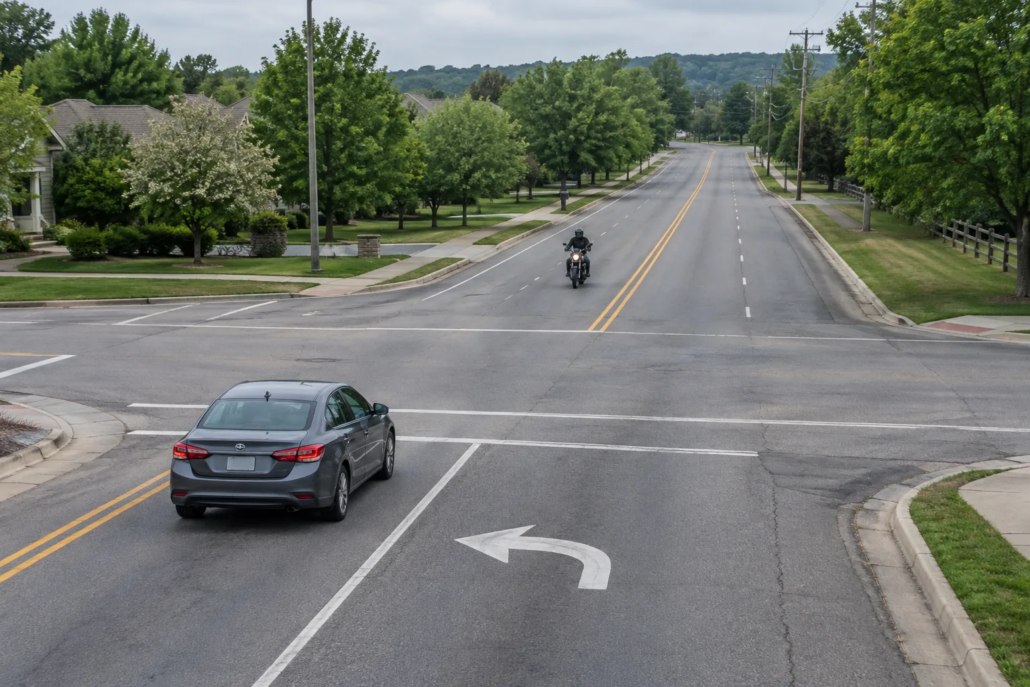
Who’s Liable in a Springdale Motorcycle Left-Turn Crash?
A driver starts a left turn just as a motorcycle approaches the intersection. The rider brakes or swerves, but the vehicles collide. Afterward, the question is not answered just by looking at which vehicle was hit. A Springdale motorcycle left turn accident claim may depend on timing, visibility, traffic controls, and what each person did before impact. Elliot & Smith Law Firm helps explain how those practical details can matter. This article covers how responsibility may be evaluated, how to record the intersection and locate witnesses, and how to organize information for an insurance claim.
Who may be responsible in a Springdale motorcycle left-turn accident claim?
A driver turning left generally must yield when required by the traffic control and circumstances. But a collision alone does not establish who was legally responsible. Investigators and insurers may examine whether the turning driver had a reasonable opportunity to see the motorcycle, when the turn began, and whether the motorcycle was traveling in a lane with the right of way.
The rider’s actions can matter too. Relevant questions may include whether the motorcycle was visible, how quickly it was approaching, whether its lights were on, and whether the rider had time and space to respond. Signal phases, obstructed sight lines, road conditions, and the positions of other vehicles can add context. In a Springdale crash, the sequence may be disputed, so conclusions made before the evidence is gathered can be incomplete.
Arkansas uses comparative-fault principles. Depending on the facts and the applicable rules, a person’s share of fault may affect the amount recoverable, and a fault threshold may limit recovery. The precise effect depends on the parties and evidence. The practical issue is to establish what each person did and how that conduct contributed to the collision. For more background on proof of negligence in an Arkansas injury claim, consider how conduct, causation, and supporting evidence fit together.
Why the impact point does not tell the whole story
A motorcycle may be struck by a turning car even when the important events began several seconds earlier. A witness’s view of the signal, a vehicle’s position before the turn, or a sudden change in traffic flow may help explain how the collision developed. Those details can support or challenge accounts from either driver.
What intersection evidence can clarify a Springdale left-turn motorcycle crash?
An intersection changes quickly after a collision. Vehicles move, traffic signals cycle, and temporary obstructions may be cleared. If it is safe and practical, photographs or video can preserve details such as lane markings, turn lanes, signal heads, sight lines, nearby entrances, and the direction each vehicle traveled. Wider views can show the layout; closer views can capture relevant marks or debris. Avoid entering traffic or putting yourself at risk to obtain images.
A useful record may include:
- The intersection’s layout and the approach taken by each vehicle.
- Traffic signs, signal locations, lane arrows, and obstructions to visibility.
- The location of vehicle damage, debris, skid marks, or other physical evidence, if visible.
- The date, approximate time, weather, and lighting conditions.
- Names and contact information for witnesses who saw the approach, signal, or turn.
Witnesses may leave before anyone has time to speak with them. A brief, neutral request for contact details can help preserve a way to follow up. Avoid asking a witness to adopt a particular version of events. A police report may contain observations and contact information, but it is one source of evidence, not necessarily the complete account. More suggestions on evidence to preserve after an Arkansas car crash can help readers think through what may be lost as the scene changes.
In Springdale, the investigating agency may depend on where the collision occurred and the circumstances. Keep any report or incident reference information available and note which agency responded, rather than assuming every crash is handled by the same office.
How can riders organize a motorcycle accident claim after the crash?
Intersection evidence addresses how the collision happened. A claim file should also keep related communications and documented losses in order. Riders may find it helpful to keep a dated record of contacts with insurers, save copies of messages and forms, and write down what they remember while the details are fresh. Separate firsthand observations from things learned later, and label photographs with when and where they were taken.
A well-organized file may include:
- The crash report and any available scene photographs or video.
- Witness names and contact details, plus notes about what each person observed.
- Insurance information and records of communications with claim representatives.
- Bills, treatment records, and receipts connected with the crash.
- Information documenting missed work or other claimed losses.
Keep records even while responsibility is being investigated. For example, readers may have questions about Springdale motorcycle medical bills during a pending claim. Organizing expenses, treatment documentation, and insurance information can make it easier to understand what has been paid and what remains under review. An Arkansas motorcycle injury claim guide offers broader context about preserving evidence and communicating with insurers.
Avoid guessing about speed, signal timing, or fault when you do not know the answer. If an insurer asks for a statement or documents, the response may become part of its evaluation. The appropriate approach can depend on the circumstances, so an attorney can explain options without assuming the claim will turn out a particular way. For a broader overview of documenting losses, see how to value an injury claim after a crash.
When a disputed account may call for guidance
Different accounts, missing witnesses, unclear signal timing, or an insurer’s disagreement about responsibility can make a claim harder to evaluate. A conversation with Springdale accident lawyers after a serious crash may help a rider understand what evidence is relevant and what questions to ask. The usefulness of legal help depends on the individual circumstances.
Frequently Asked Questions
Is the turning driver automatically responsible when a car hits a motorcycle?
No. A left-turning driver may have a duty to yield, but responsibility depends on the circumstances, including traffic controls, visibility, timing, and each person’s actions. Evidence may show that more than one factor contributed to a crash. The vehicle that made contact, by itself, does not establish fault. An insurer or other decision-maker may review reports, statements, photographs, and other available information.
What if there were no witnesses to the Springdale motorcycle crash?
A claim does not necessarily depend on having an independent witness. Photographs, vehicle damage, physical marks, crash reports, and other records may help explain what happened. Some nearby businesses or residences may have cameras, although footage may not be available or retained. The evidence that exists will vary by location and circumstances, so a claim assessment should not assume that missing witness testimony resolves the question of responsibility.
Can a rider share fault in an Arkansas left-turn collision?
Potentially. Arkansas comparative-fault rules may affect a claim if evidence indicates that more than one person contributed to the collision. The effect depends on how fault is assessed and which parties are involved; a rider’s account is not the only evidence considered. Because fault allocation can have legal consequences, an attorney licensed in Arkansas can explain how the applicable rules may relate to a particular set of facts.
Should I keep records if the insurance company is still investigating?
Keeping relevant records can help you track what has happened while the investigation continues. Depending on the situation, these may include the crash report, witness details, insurer communications, receipts, bills, and documents related to missed work. Retain copies and note when information was received. This is general information, not a direction about how to respond to a particular insurer request; the right approach can depend on the claim.
How Elliot & Smith Law Firm Can Help
Elliot & Smith Law Firm is dedicated to helping injured people understand the questions that can arise after a motorcycle collision. When a left-turn crash involves conflicting accounts or uncertainty about what the intersection evidence shows, the firm can review the available information, discuss the insurance-claim process, and explain possible next steps based on the circumstances. A motorcycle accident lawyer in Springdale, AR, may be able to help identify relevant records and assess how Arkansas rules could apply. Contact Elliot & Smith Law Firm to request a free consultation or case evaluation and discuss your situation.
The information in this article is for educational purposes only and does not constitute legal advice. Contact a qualified attorney licensed in Arkansas for advice specific to your situation; laws vary by location and may change after publication.


