
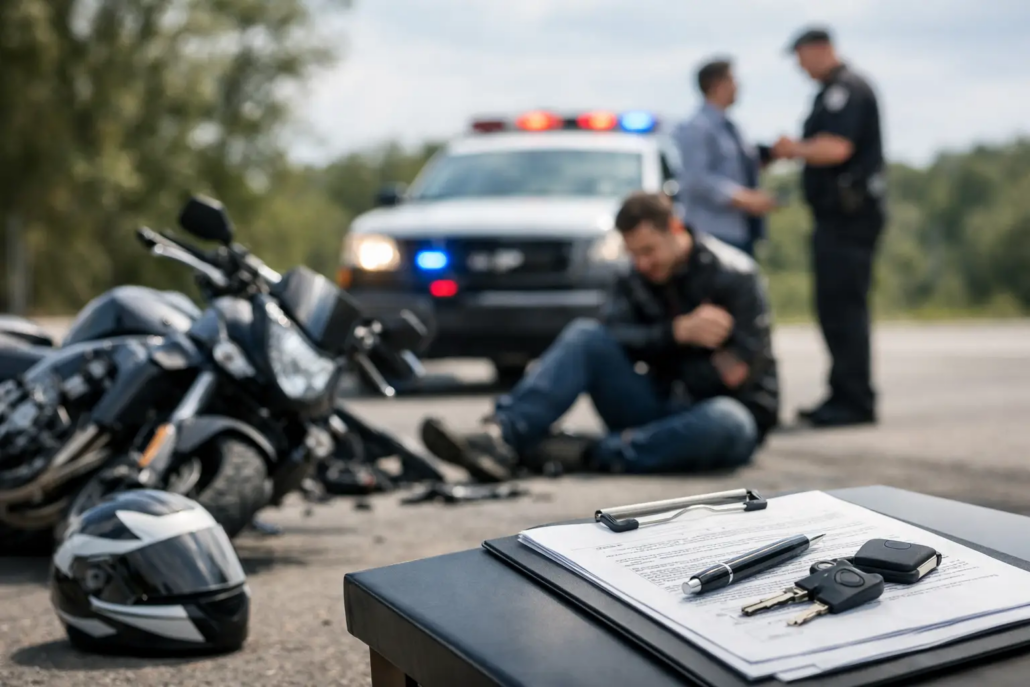
Motorcycle Injury Claim Guide for Arkansas Riders
A motorcycle crash can turn a normal ride into an emergency in seconds. This motorcycle injury claim guide is for Arkansas riders facing the real fallout: painful injuries, a damaged bike, missed work, medical bills, and an insurance company already looking for ways to limit what it pays. You do not have to accept that pressure or handle the fight alone.
Start Protecting Your Claim at the Scene
Your health comes first. Accept emergency care when it is offered, and get evaluated promptly even if you think you can walk away from the crash. Adrenaline can hide serious injuries, including head trauma, internal injuries, and damage to the spine, shoulders, knees, or wrists. Delaying care can also give an insurer room to argue that the collision was not the real cause of your condition.
If you are physically able, document what happened before the scene changes. Take photos or video of the vehicles, your motorcycle, road debris, skid marks, traffic signals, weather conditions, visible injuries, and the positions of everyone involved. Get names and contact information for witnesses. Their independent account may become critical if the other driver later changes the story.
Call law enforcement and make sure a crash report is created. Be factual, but do not guess about speed, distance, or fault. Never apologize simply because you are shaken up. A statement like “I’m sorry” can be twisted into an admission, even when another driver cut you off, turned in front of you, drifted across a lane, or failed to yield.
Get Medical Care and Follow Through
The first medical visit is not the finish line. Follow your treatment plan, attend follow-up appointments, and keep records of every provider you see. Gaps in treatment are common when someone is trying to get back to work or care for family, but insurers often use those gaps to claim the injury was minor or resolved.
Keep a simple daily record of how the injury affects your life. Note pain levels, sleep problems, missed events, difficulty driving, household tasks you cannot do, and days you miss from work. Medical records show diagnoses. Your own notes can show the human cost of the crash.
Do not minimize your symptoms to a doctor, an employer, or an insurer. Be accurate. If your shoulder pain keeps you from lifting, say so. If headaches make it impossible to focus at work, document it. A fair claim must account for the full impact of the collision, not just the first emergency room bill.
Preserve Evidence Before It Disappears
Motorcycle claims are often decided by evidence gathered early. Vehicles get repaired, surveillance footage is overwritten, witnesses become difficult to locate, and the physical scene changes. The other driver may insist they never saw you, even when the evidence shows they should have.
Do not repair, sell, or discard your motorcycle until it has been thoroughly photographed and evaluated. Damage patterns can help establish the point of impact and challenge a false version of events. Save your helmet, riding gear, damaged clothing, and any parts that came off the bike. Those items may matter.
A strong investigation may also include nearby business or home camera footage, 911 recordings, vehicle data, phone records when distracted driving is suspected, and evidence of impaired driving. In a serious collision, waiting for the insurance company to investigate is a mistake. Its adjuster is not working to build your case.
Be Careful With Insurance Companies
You may need to report the wreck to your own insurer, but you are not required to give the other driver’s insurance company a recorded statement or broad access to your medical history. Adjusters are trained to ask questions that narrow the claim, create inconsistencies, or push you toward a quick settlement before you understand your injuries.
Be especially cautious about an early offer. It may sound helpful when bills are arriving, but once you sign a release, you usually cannot return for more money if surgery, ongoing therapy, lost earning capacity, or chronic pain becomes clear later. The value of a motorcycle injury claim depends on the facts, and it is often impossible to know the full value in the first days after a crash.
You should also stay off social media while your claim is pending, or at least assume anything you post could be used against you. A single photo taken at a family gathering can be mischaracterized as proof that you are not injured. Privacy settings do not make a post safe from discovery.
Understand How Fault Can Affect Recovery
Insurance companies often lean on unfair stereotypes about motorcyclists. They may suggest the rider was speeding, lane splitting, riding aggressively, or taking an unreasonable risk simply because a motorcycle was involved. That bias is not evidence.
Arkansas follows a modified comparative fault rule. In general, an injured person may recover damages if they are less than 50 percent at fault, but their compensation can be reduced by their share of responsibility. If a jury finds you 20 percent responsible for a $100,000 loss, the recovery could be reduced by $20,000. If you are found 50 percent or more at fault, you may be barred from recovering from the other party.
That makes the details matter. Whether a driver failed to yield, ran a light, followed too closely, opened a door into traffic, or made an unsafe lane change can be central to the claim. So can evidence that you were visible, properly positioned, and operating your motorcycle lawfully. Do not let an insurer assign fault without a serious review of the evidence.
Know What Compensation May Cover
A motorcycle injury claim is not limited to the cost of fixing or replacing your bike. Depending on the circumstances, compensation may include medical expenses, future treatment, rehabilitation, lost income, reduced ability to earn, property damage, pain and suffering, scarring, disfigurement, and the loss of normal activities.
For a catastrophic injury, future losses can be substantial. A person may need continued therapy, mobility equipment, home modifications, or help performing work and daily tasks. The right claim must consider those long-term consequences rather than treating the case like a routine fender bender.
If a loved one was killed in a motorcycle crash, surviving family members may have a wrongful death claim. No legal action can undo that loss. It can, however, hold the responsible party accountable and seek financial support for the family left behind.
Watch the Deadlines, but Do Not Rush a Settlement
Most Arkansas personal injury lawsuits are subject to a three-year filing deadline, but exceptions and shorter notice requirements can apply in some situations. Claims involving a government entity, an uninsured driver, a defective motorcycle part, or a disputed insurance policy can raise separate issues. Waiting too long can destroy an otherwise valid case.
A deadline does not mean you should settle before your medical condition is understood. It means you should get legal advice early enough to preserve evidence, identify every potential source of coverage, and build the claim from a position of strength.
When to Bring in a Motorcycle Accident Lawyer
You should consider speaking with an attorney as soon as possible if you suffered serious injuries, the other driver blames you, there are multiple vehicles, an insurer disputes coverage, or the settlement offer does not cover your losses. Legal help is also valuable when a crash involves a commercial vehicle, a drunk driver, a hit-and-run driver, or a fatality.
A lawyer can take over insurer communications, investigate liability, calculate the full scope of damages, and prepare the case for trial if the insurance company refuses to be fair. That pressure matters. Insurers evaluate claims differently when they know the injured rider has counsel ready to prove the case.
At Elliott & Smith Law Firm, injured riders can seek a free consultation without paying upfront attorney fees. The focus is simple: take the burden off your shoulders, protect your claim, and fight for compensation that reflects what this crash has taken from you.
The next call you make after a motorcycle wreck can shape what happens next. Get medical care, preserve what you can, and do not let an insurance adjuster decide the value of your recovery before you know the full cost of the harm.


