
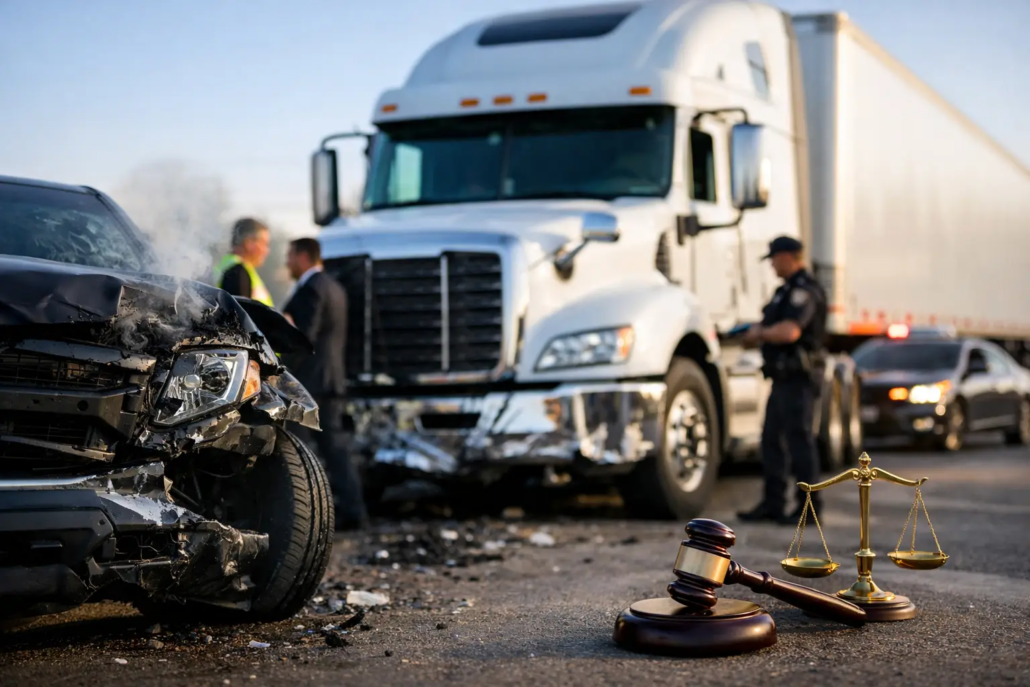
Top Causes of Truck Crashes and Who May Pay
A fully loaded tractor-trailer can weigh up to 80,000 pounds. When that much weight collides with a passenger vehicle, the result is often life-changing: traumatic injuries, long hospital stays, lost income, and a family suddenly facing bills it never planned for. Understanding the top causes of truck crashes can help injured people recognize why these cases demand a serious investigation from the start.
A truck wreck is rarely just an unfortunate moment on the road. It may trace back to a rushed delivery schedule, a driver who should not have been behind the wheel, poorly maintained brakes, or a company that chose profits over safety. The driver may be at fault, but the trucking company, cargo loader, maintenance provider, or another party may also share responsibility.
Top Causes of Truck Crashes on Arkansas Roads
Commercial trucks travel every major Arkansas route, from busy Northwest Arkansas corridors to rural highways with limited shoulders and sharp curves. The risks change with the road, weather, traffic, and cargo, but several causes appear again and again in serious truck collision claims.
Driver fatigue and hours-of-service violations
Long-haul truck drivers work under demanding schedules. Federal rules limit how long commercial drivers can operate without required rest, but a rule on paper does not protect anyone if a driver or company ignores it.
Fatigue can slow reaction time, impair judgment, and cause a driver to drift out of a lane or miss stopped traffic. In the worst cases, a driver falls asleep for seconds at highway speed. Those seconds are enough to cause a devastating rear-end crash, head-on collision, or rollover.
A proper investigation may examine electronic logging device data, dispatch records, delivery deadlines, fuel receipts, cell phone records, and driver logs. These records can reveal whether the driver was pressured to keep moving beyond safe or legal limits.
Distracted driving
A commercial driver has more to manage than the average motorist: mirrors, blind spots, traffic conditions, braking distance, cargo movement, dispatch communications, and navigation. Looking down at a phone, tablet, paperwork, or onboard device can take attention away at exactly the wrong time.
Texting, scrolling, entering directions, or communicating with dispatch while driving can be dangerous for any motorist. In an 18-wheeler, it can be catastrophic. A truck may travel the length of a football field while its driver looks away for only a few seconds.
Distraction is not always obvious at the crash scene. Phone records, truck computer data, dash camera footage, and witness statements may be needed to establish what happened inside the cab before impact.
Speeding and driving too fast for conditions
Truck drivers need far more distance to stop than passenger vehicles. A driver traveling too fast may not be able to avoid slowed traffic, a construction zone, a curve, or a vehicle that has stopped ahead. Even when the truck is within the posted speed limit, speed can still be unsafe in heavy rain, fog, ice, road work, or congested traffic.
Arkansas weather can change road conditions quickly. Wet pavement, standing water, and low visibility demand caution. A trucking company should train drivers to adjust their driving, not reward them for meeting a deadline at any cost.
Impaired driving
Alcohol, illegal drugs, and prescription medications can all impair a truck driver’s ability to operate safely. Stimulants may be used to fight fatigue, but they do not replace rest. They can also lead to poor decisions, overconfidence, and an eventual crash when the driver can no longer stay alert.
Commercial drivers are subject to strict rules concerning drugs and alcohol. When there is evidence of impairment, an investigation may include post-crash testing records, company testing policies, prior violations, and hiring files. A company that ignored warning signs may have created a preventable danger for everyone sharing the road.
Improper lane changes and blind-spot crashes
Trucks have large blind spots along both sides, directly behind the trailer, and in front of the cab. Those blind spots do not excuse a careless lane change. Drivers must check mirrors, signal, allow sufficient space, and make sure a lane is clear before moving a vehicle that can crush or force another driver off the road.
Side-impact and underride crashes often happen when a truck merges, turns, or changes lanes without seeing a smaller vehicle. Intersections create another danger. A wide right turn can trap a vehicle, cyclist, or pedestrian between the truck and curb if the driver turns without enough room or awareness.
Unsafe loading and cargo securement
Cargo must be loaded, balanced, and secured correctly. If it is not, the load can shift during braking or cornering, making the trailer unstable and increasing the risk of a rollover or jackknife. Cargo can also spill onto the road, creating a hazard for other motorists.
Responsibility may fall on more than the trucking company. A shipper, warehouse, cargo-loading contractor, or freight broker may have played a role, depending on who controlled the loading process and what went wrong. These cases require close review because the responsible party is not always visible in the police report.
Mechanical failures and poor maintenance
Brake problems, tire blowouts, steering failures, broken lights, and worn coupling equipment can turn an ordinary drive into an emergency. Commercial vehicles require regular inspection and maintenance because the consequences of failure are so severe.
Not every mechanical issue is the result of negligence. Parts can fail unexpectedly. But maintenance logs, inspection reports, repair invoices, recall information, and prior driver complaints may show that a problem was known, ignored, or poorly repaired. When a company puts an unsafe truck on the road, it should be held accountable for the harm that follows.
Why Fault in a Truck Crash Is Often Complicated
The cause of a truck crash is not always the same as the party legally responsible for it. A tired driver may have made the immediate mistake, while a trucking company created unreasonable schedules. A brake failure may appear to be an equipment problem, but the evidence may point to missed inspections or careless repair work.
Truck companies and their insurers often begin protecting their interests immediately. They may send investigators to the scene, inspect the damaged vehicles, and collect records before injured victims have had a chance to understand the full scope of their losses. That is why early action matters.
A strong claim may require evidence that disappears quickly, including electronic data from the truck, dash camera footage, driver logs, maintenance records, dispatch messages, surveillance footage, and witness accounts. An experienced attorney can demand that key evidence be preserved instead of allowing a company to control the story.
What to Do After a Serious Truck Collision
Your health comes first. Accept emergency care and follow through with recommended treatment. Some injuries, including brain injuries, internal trauma, and spinal damage, may not be fully apparent at the scene.
Once you are safe, take practical steps to protect yourself:
- Report the crash and obtain the responding agency’s report when it becomes available.
- Photograph vehicle damage, debris, roadway conditions, visible injuries, and anything else that may document the scene.
- Keep medical records, bills, insurance letters, repair estimates, and proof of missed work in one place.
- Do not give a recorded statement or accept a quick settlement before you understand your injuries and your legal options.
- Speak with a truck accident attorney promptly, especially if a loved one was seriously hurt or killed.
Insurance companies may sound helpful while looking for a fast, low-cost resolution. Their offer may not account for future treatment, reduced earning ability, pain, disability, or the pressure the crash has placed on your household. You do not have to carry those negotiations alone.
Elliott & Smith Law Firm helps injured Arkansas families take on trucking companies and insurers with focused, aggressive representation. A case evaluation can clarify what evidence should be protected, who may be responsible, and what compensation may be available.
After a truck crash, the strongest next step is often taken before the calls, paperwork, and pressure from insurers have a chance to overwhelm you. Get medical care, protect the evidence, and make sure someone is prepared to fight for the full cost of what was taken from you.


