
Car Accident Evidence That Protects Your Claim
The other driver may apologize at the scene, then tell their insurer a different story days later. A business may record over its security footage. A damaged vehicle may be repaired or sold. Strong car accident evidence protects you from having your claim reduced to competing versions of what happened.
After a serious Arkansas crash, your first job is to get medical care and protect your safety. But if you are physically able, or if a trusted family member can help, preserving proof early can make a real difference in the compensation available for your injuries, missed work, and other losses. Insurance companies look for gaps. The right evidence fills them.
Car Accident Evidence Starts at the Scene
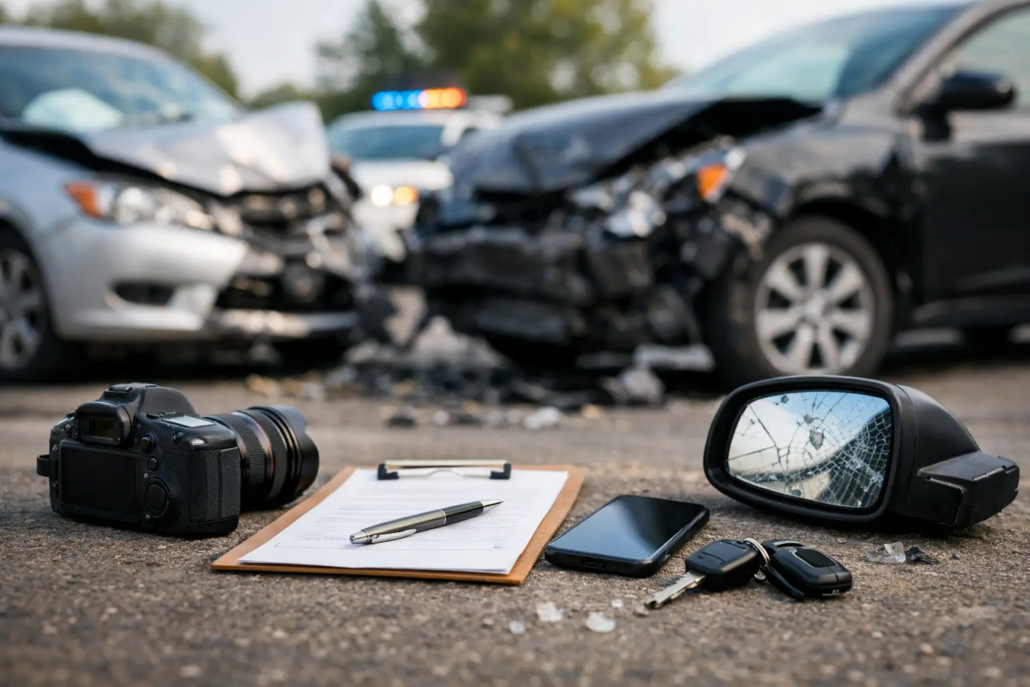
Photos taken immediately after a collision often tell a clearer story than memories recalled weeks later. Take wide photos that show the full intersection, road layout, traffic lights, lane markings, weather, and nearby businesses. Then take closer photos of vehicle damage, debris, skid marks, broken glass, airbags, license plates, and any visible injuries.
Do not assume a small dent means a minor injury. Vehicle damage is only one piece of the case. Still, photos of the damage and final resting positions of the vehicles can help accident reconstruction experts and attorneys evaluate the force and direction of impact.
If it is safe to do so, gather the following before leaving the scene:
- The other driver’s name, contact information, insurance information, and license plate number
- Names and phone numbers for witnesses, especially people who saw the crash from a neutral position
- Photos or video of the roadway, signals, signs, damage, and visible injuries
- The responding officer’s name and the police report or incident number
- Notes about what the other driver said, including apologies or statements about distraction, speeding, or failing to see you
Do not argue with the other driver or accuse anyone at the scene. Keep your words measured. You can cooperate with law enforcement, state the facts, and seek care without giving an insurer material to use against you later.
Evidence That Can Prove What Happened
A police report can be useful, but it is not the entire case. Officers often arrive after the collision and must rely on statements, observations, and physical evidence available at that moment. If the report contains an error, it may be possible to address it, but do not wait to examine it.
Witness testimony can be especially valuable when the other driver denies fault. An independent witness who saw a driver run a red light, drift across a centerline, tailgate, or use a phone may have no reason to favor either side. Get contact information promptly. Witnesses move, phone numbers change, and memories fade.
Video evidence can be even more decisive. Nearby homes, gas stations, stores, traffic cameras, and doorbell cameras may have captured the collision or the moments leading up to it. Most systems do not keep recordings forever. Some automatically overwrite footage within days. An attorney can move quickly to identify potential footage and send a formal request to preserve it.
Modern vehicles may also hold crucial digital information. Depending on the vehicle and crash, evidence may include data from an event data recorder, onboard computer, dash camera, infotainment system, or GPS service. This information can sometimes show speed, braking, steering, seat belt use, and other vehicle activity around the time of impact. It must be handled correctly. Do not allow a damaged vehicle to be destroyed, repaired beyond recognition, or released without first considering whether it contains evidence.
Cell phone records can matter when distracted driving is suspected. They may help establish whether a driver was calling, texting, or using data shortly before the crash. Obtaining those records usually requires proper legal steps. Do not try to access someone else’s phone or account yourself. Let your lawyer pursue lawful preservation and discovery.
Your Injuries Are Evidence Too
Medical documentation ties the crash to the harm it caused. Go to the emergency room, urgent care, primary care provider, or specialist as your condition requires. Follow through with recommended treatment. Gaps in care give insurers room to argue that you were not seriously injured or that something else caused your symptoms.
Keep copies of discharge instructions, prescriptions, imaging results, therapy records, receipts, and bills. A simple daily journal can also help. Record pain levels, sleep disruption, mobility problems, missed activities, and the ways your injuries affect work and family life. These details may not appear fully in a medical chart, yet they matter when calculating the true cost of a crash.
Lost-income evidence deserves the same attention. Save pay stubs, tax documents, attendance records, and written confirmation from your employer regarding missed time, reduced hours, or job duties you can no longer perform. For self-employed people, invoices, calendars, contracts, and prior earnings records can help show what the collision has taken from them.
Preserving Car Accident Evidence Before It Is Gone
The most damaging mistake is waiting because you expect the insurance company to investigate fairly. The insurer has its own financial interests. Its adjuster may collect a recorded statement, inspect vehicles, and look for information that limits the claim. You have the right to protect your own interests before signing releases or accepting a quick settlement offer.
Save everything connected to the collision in one place. That includes photos, videos, texts, emails, repair estimates, towing paperwork, medical records, and letters from insurers. Screenshot communications rather than relying on a message thread that could disappear. Back up digital files to a secure location and avoid editing the original images or video.
Be cautious on social media. A photo of you smiling at a family event or attempting a normal task can be taken out of context and used to challenge the severity of your injuries. You do not have to stop living your life, but you should assume an insurance company may review public posts. Ask friends and family not to post about the collision, your injuries, or your claim.
When the Other Side Controls the Proof
Some of the best evidence may be in someone else’s hands. A trucking company may hold driver logs, inspection records, electronic data, and dash camera footage. A commercial property may control surveillance video. The at-fault driver may possess the vehicle, phone, or documents that matter most.
That is when fast legal action matters. An experienced injury lawyer can investigate the crash, identify evidence sources, send preservation notices, work with qualified experts when necessary, and handle insurer communications while you focus on recovery. Waiting can mean losing proof that cannot be recreated.
Do Not Let a Quick Settlement Define Your Loss
An early offer may sound like relief when bills are arriving and you cannot work. But once you sign a release, you may give up the right to seek more compensation, even if your injuries worsen or future treatment becomes necessary. The value of a claim depends on the evidence, the severity of the harm, available insurance coverage, fault, and the long-term impact on your life.
Elliott & Smith Law Firm represents injured Arkansans who need a legal team prepared to fight for full compensation. A free case evaluation can help you understand what evidence should be protected and whether an insurer’s offer reflects the real losses you face. There is no fee unless a recovery is obtained.
Your recovery should not depend on who tells the loudest story. Preserve what you can, get the care you need, and get legal guidance before critical evidence or your leverage disappears.


